Johannes Reuber
A village boy from Niedervellmar goes to war against George Washington at seventeen. He is taken prisoner, stands before Charleston, later fights at Mainz and in Flanders, and dies a linen weaver in his village. He writes down everything he lives through.
The great books on the American Revolution know him as a witness of Trenton. Here is his whole life.
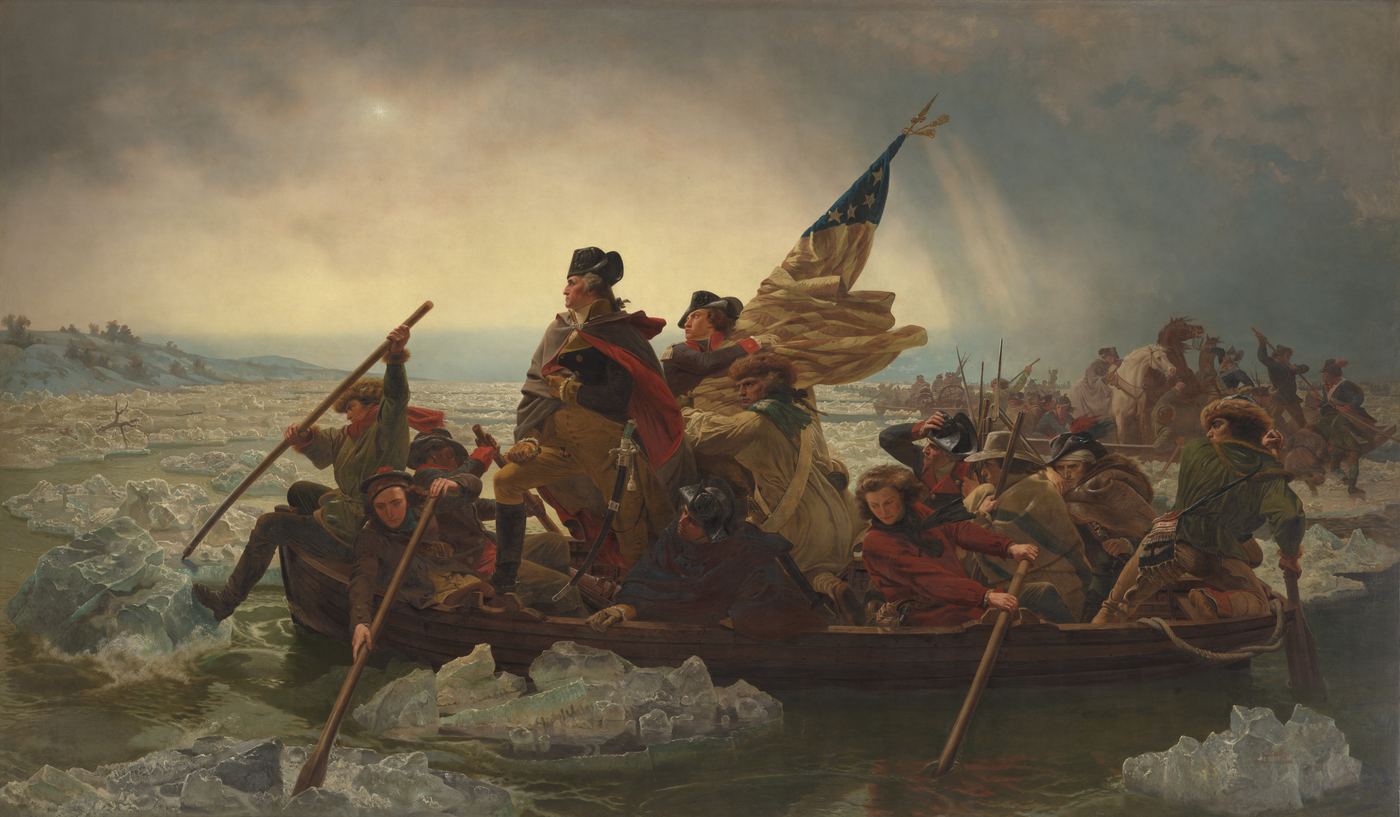
Emanuel Leutze, “Washington Crossing the Delaware,” 1851. The Metropolitan Museum of Art (97.34). CC0.
Washington, the Revolution, Napoleon
A common soldier, neither a general nor a prince, lives through three events that changed the world, and writes them down.
The American Revolution
With Rall’s grenadiers he fights on Long Island and at White Plains, storms Fort Washington, and is captured at Trenton. Later he serves at Savannah and Charleston.
The French Revolution
He marches against revolutionary France to Mainz and then to Flanders, for the second time on the side of the British.
Napoleon
Napoleon’s troops occupy Kassel. The old Hessian grenadiers must line up in the churchyard of Kirchditmold. On Christmas Day 1806 Reuber receives his discharge.
From Niedervellmar to Charleston and back
The village
- March 2, 1759
Born in Niedervellmar just outside Kassel, a village of about sixty houses, the son of a day laborer.
- 1775
At sixteen he volunteers and becomes a grenadier in the Rall Regiment.
America
- April 1776
On foot down the Weser, about 220 miles (350 kilometers) to Bremerlehe. On April 12 he goes aboard.
- August 1776
After weeks at sea, Staten Island lies before him, and beyond it New York.
- August 27, 1776
Battle of Long Island; in October, White Plains.
- November 16, 1776
With Rall’s grenadiers he storms Fort Washington, the Americans’ last fortress on Manhattan.
- December 26, 1776
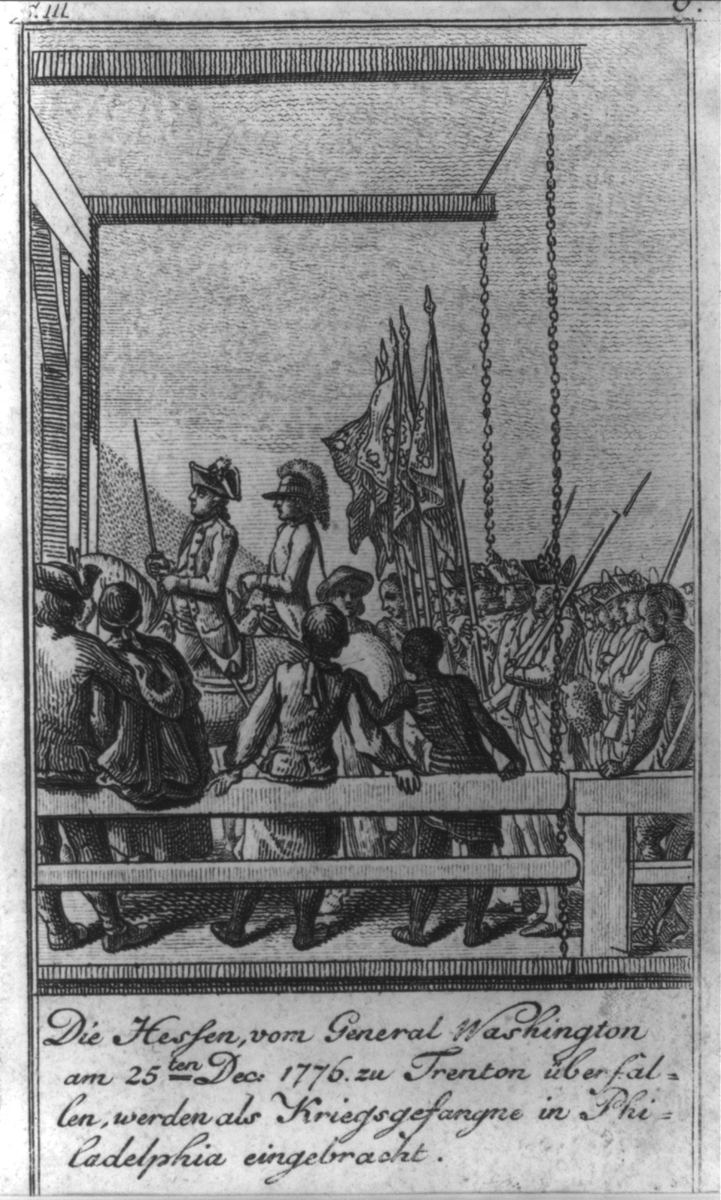
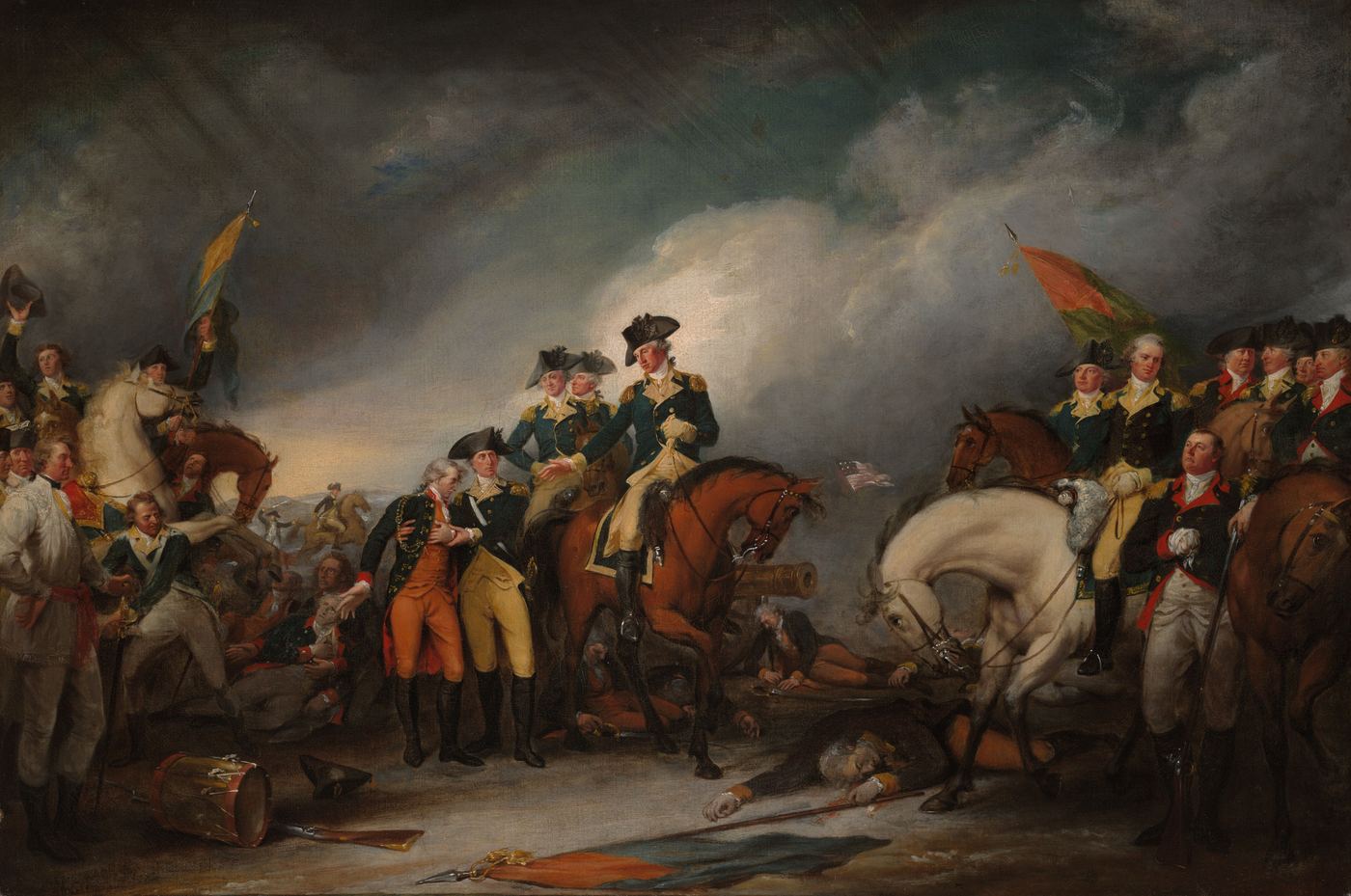
Washington has crossed the Delaware on Christmas night. On the morning of the second day of Christmas, Reuber is captured at Trenton.
- December 30, 1776
Led through Philadelphia as a prisoner, then taken to Lancaster.
- 1777
Held at Lancaster, then marched as far as Winchester, Virginia.
- September 1778
Exchange of prisoners. At the end of the year he sails to Savannah, Georgia.
- 1780–1782
Before Charleston, South Carolina; afterward his regiment lies there in garrison.
- October 1783
His ship anchors off Bremerlehe, seven years, five months, and 27 days after he sailed.
Europe
- 1792
Now in the Guards Grenadier Regiment; in November his battalion lies at Koblenz.
- 1793
Siege of Mainz, where the first republic on German soil falls.
- 1793–1794
Campaign in Flanders: Tournai, and in April 1794 the siege of Landrecies.
- March 1800
He marries Martha Carl.
- December 1806
Napoleon’s governor has the old Hessian grenadiers line up in the churchyard of Kirchditmold, shakes his head, and rides off. On December 25, after thirty years of service, Reuber receives his discharge, thirty years after Trenton, almost to the day.
At the loom
- afterward
Linen weaver in Niedervellmar, father of two daughters and two sons.
- March 25, 1832
He dies in Niedervellmar, seventy-three years old, three days after Goethe.
Dates follow the checked edition of the book. The names list of the original edition gives 1757 as his year of birth; the companion pages give the sources.
Twice across the Atlantic
At a time when most country people left their village at most for the market in the nearest town, this grenadier crossed the Atlantic twice. He saw New York, Philadelphia, and Charleston, survived captivity, and came back to the loom in his village.
The map from the book shows his route from 1776 to 1783, with the march as a prisoner of war and the voyage home.
See his drawings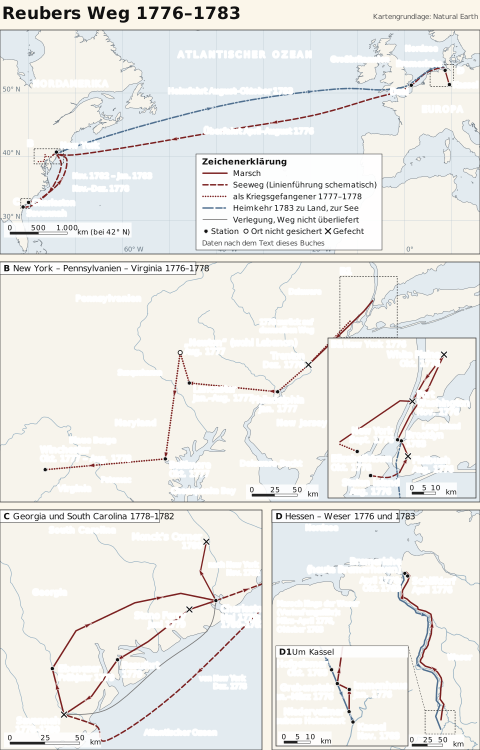
How others saw it